Buying a home in Canada is a major financial decision, and understanding your potential mortgage payment is an important part of planning your budget. A mortgage payment calculator Canada can help you estimate how much you may need to pay each month based on your mortgage amount, interest rate, and repayment period.
Whether you are buying your first home, refinancing an existing mortgage, or comparing different mortgage options, calculating your estimated monthly payment can make it easier to understand what you can afford.
What Is a Mortgage Payment Calculator?
A mortgage payment calculator is an online tool that estimates your regular mortgage payments using information such as:
- Mortgage amount
- Interest rate
- Amortization period
- Payment frequency
- Down payment
- Loan term
By entering these details, you can get an estimate of your mortgage payment and better understand the potential cost of borrowing.
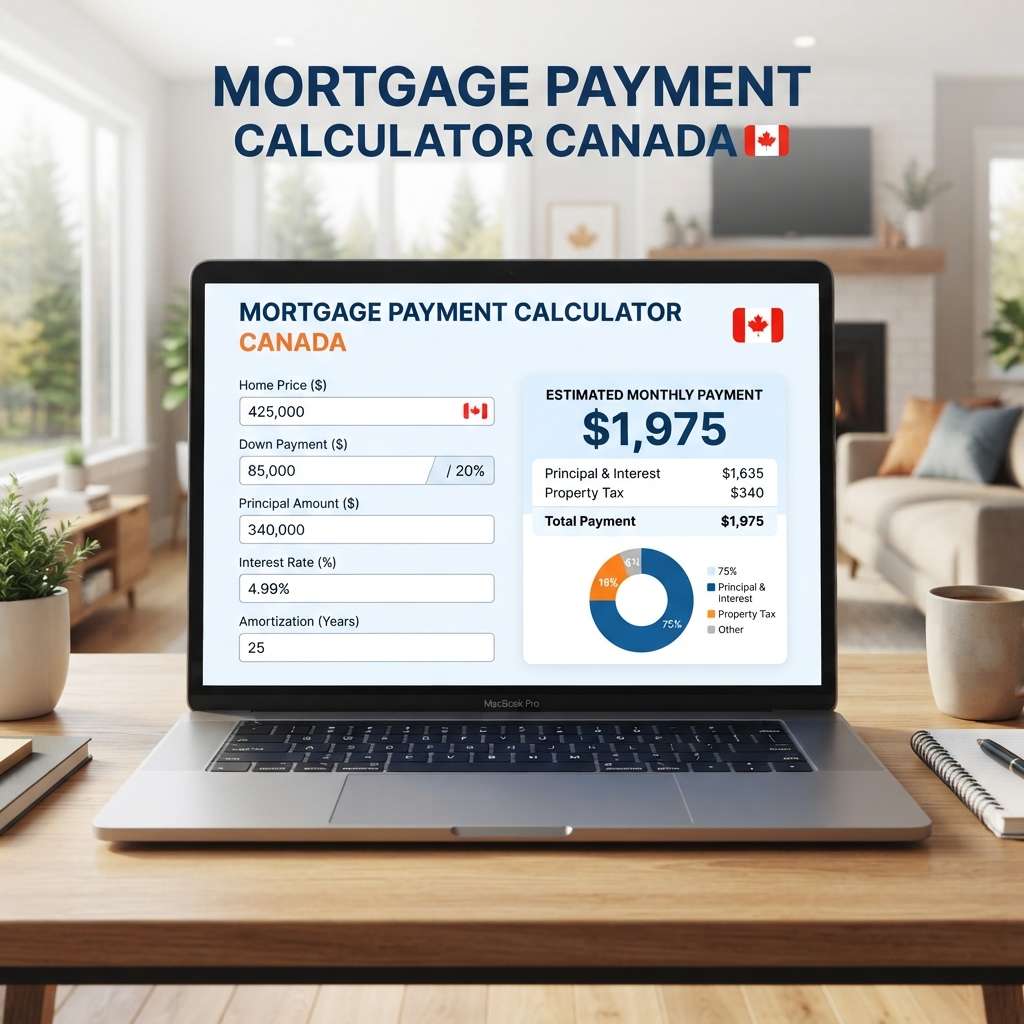
If you want to calculate your payment quickly, use our Mortgage Payment Calculator Canada to estimate your monthly mortgage costs.
How to Calculate Mortgage Payments in Canada
Your mortgage payment depends on several factors. The most important ones are the amount you borrow, the interest rate, and the amortization period.
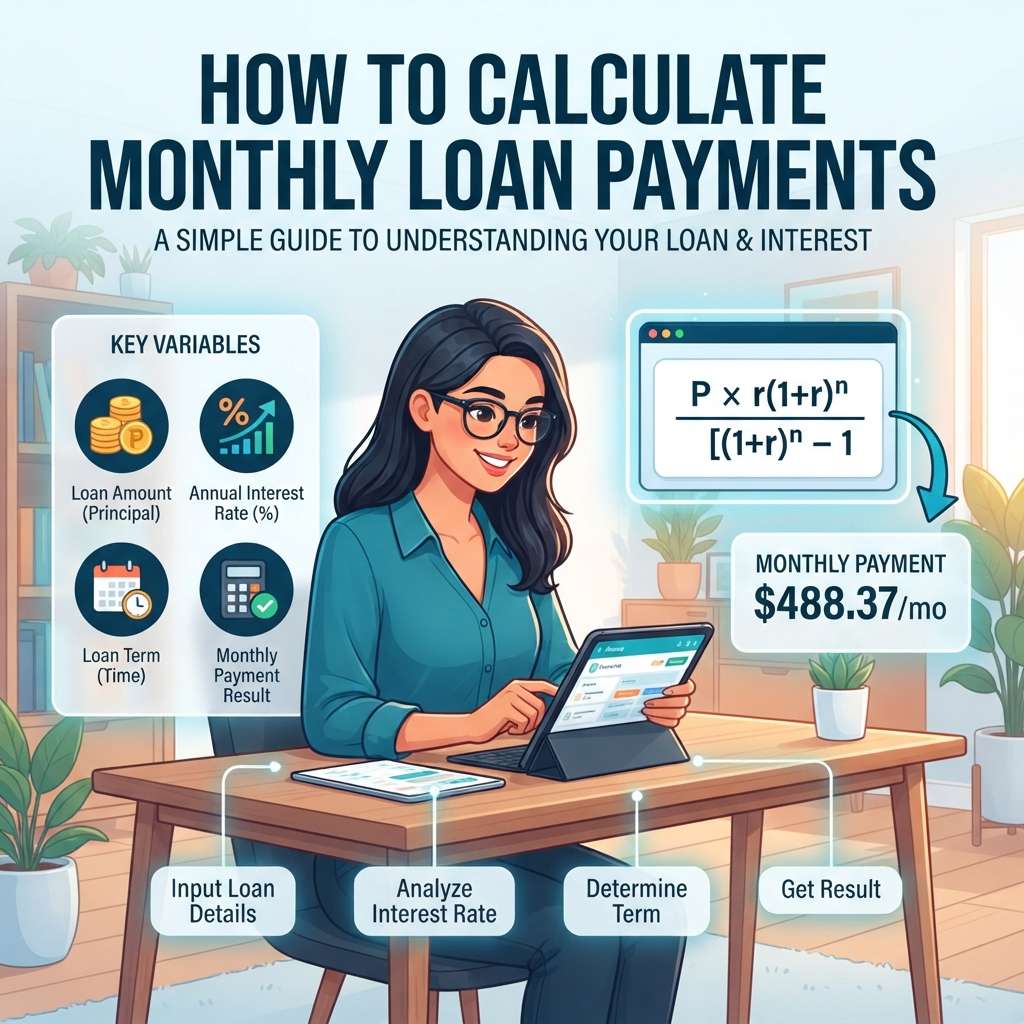
A common mortgage payment formula is:
M = P × [r(1 + r)ⁿ] ÷ [(1 + r)ⁿ − 1]
Where:
- M = Mortgage payment
- P = Principal or mortgage amount
- r = Periodic interest rate
- n = Total number of payments
For example, if you borrow $400,000 at a fixed interest rate, the amount you pay each month will depend on the applicable mortgage rate and the length of time you take to repay the loan.
Because mortgage calculations can become complicated, using an online mortgage calculator can save time and reduce the possibility of calculation errors.
What Information Do You Need to Use a Mortgage Calculator?
To get a useful estimate, you will generally need a few basic pieces of information.
1. Home Price
The purchase price of the property is the starting point for determining how much financing you may need.
For example, if a home costs $500,000 and you make a $100,000 down payment, your initial mortgage amount would be $400,000 before considering other costs.
2. Down Payment
Your down payment is the amount you pay toward the property upfront.
A larger down payment generally means you need to borrow less money. Your down payment can therefore have a significant effect on your mortgage payment.
3. Mortgage Interest Rate
The interest rate determines how much interest you pay on the money you borrow.
Even a relatively small difference in interest rates can affect your monthly payment and the total interest paid over the life of a mortgage.
4. Amortization Period
The amortization period is the length of time it would take to fully repay the mortgage based on the scheduled payments.
A longer amortization period can reduce the required payment amount, but it can also result in more interest being paid over the life of the mortgage.
5. Payment Frequency
Mortgage payments in Canada may be made according to different payment schedules, such as monthly, biweekly, or weekly payments.
Changing the payment frequency can affect how quickly you reduce your mortgage balance and the total amount of interest you pay.
Example of a Canadian Mortgage Payment Calculation
Suppose you are considering a $400,000 mortgage with a 5% annual interest rate and a 25-year amortization period.
Your actual mortgage payment will depend on the lender’s calculation method, payment schedule, and other terms. Instead of calculating everything manually, you can enter your mortgage details into our Mortgage Payment Calculator Canada to get an estimate.
You can also change the mortgage amount, interest rate, and amortization period to see how different scenarios affect your estimated payment.
Why Use a Mortgage Payment Calculator in Canada?
A mortgage calculator can be useful before applying for a mortgage because it allows you to explore different borrowing scenarios.
Estimate Your Monthly Budget
Knowing your estimated mortgage payment can help you determine whether a particular home fits within your budget.
Remember that your total housing expenses may include more than your mortgage payment. Property taxes, home insurance, utilities, maintenance, and other expenses can also affect your overall housing costs.
Compare Different Mortgage Amounts
You can use a calculator to compare payments for different mortgage amounts.
For example, you could calculate payments for $300,000, $350,000, and $400,000 mortgages to see how borrowing more money may affect your monthly budget.
Compare Interest Rates
Interest rates have a direct effect on the cost of borrowing. Testing different rates with a mortgage calculator can help you understand how your estimated payment changes.
Understand the Effect of Amortization
You can also compare different amortization periods.
For example, a shorter amortization period may result in higher scheduled payments but can reduce the amount of time you spend repaying the mortgage.
Mortgage Payment vs. Total Housing Cost
It is important to understand that your mortgage payment is not necessarily the same as your total monthly housing cost.
Depending on your situation, you may also have expenses such as:
- Property taxes
- Home insurance
- Condo or strata fees
- Utilities
- Maintenance and repairs
- Mortgage insurance, where applicable
When planning your budget, consider these additional costs rather than looking only at the mortgage payment.
How a Larger Down Payment Can Affect Your Mortgage
The amount of your down payment can have a significant impact on your mortgage.
For example, consider a $500,000 home:
- $50,000 down payment = $450,000 before other considerations
- $100,000 down payment = $400,000 before other considerations
- $150,000 down payment = $350,000 before other considerations
Borrowing less can reduce the amount of interest charged over time. However, the minimum down payment and applicable mortgage insurance requirements depend on the circumstances of the purchase and current Canadian rules.
Fixed-Rate vs. Variable-Rate Mortgages
Canadian borrowers may encounter different types of mortgage rates, including fixed and variable rates.
With a fixed-rate mortgage, the interest rate is generally fixed for the mortgage term. This can make payments easier to predict during that term.
With a variable-rate mortgage, the interest rate can change based on the terms of the mortgage and changes in the underlying rate used by the lender. As a result, your interest costs and potentially your payment can change.
When comparing mortgage options, it is useful to calculate different interest-rate scenarios rather than looking at only one estimate.
How to Use a Mortgage Payment Calculator
Using an online mortgage calculator is simple.
Step 1: Enter the Mortgage Amount
Enter the amount you expect to borrow.
Step 2: Enter the Interest Rate
Enter the mortgage interest rate you want to evaluate.
Step 3: Select the Amortization Period
Choose the expected amortization period.
Step 4: Select Your Payment Frequency
Choose monthly, biweekly, weekly, or another available payment schedule.
Step 5: Calculate Your Estimated Payment
The calculator will use the information you entered to estimate your mortgage payment.
You can then adjust the numbers to compare different scenarios.
Try our Mortgage Payment Calculator Canada here.
Frequently Asked Questions
What is a mortgage payment calculator Canada?
A mortgage payment calculator Canada is an online tool that helps estimate mortgage payments based on factors such as the loan amount, interest rate, amortization period, and payment frequency.
How much is a $300,000 mortgage per month in Canada?
The monthly payment on a $300,000 mortgage depends on the interest rate, amortization period, payment frequency, and other mortgage terms. Use a mortgage calculator to enter your specific numbers and get an estimate.
How much is a $400,000 mortgage per month in Canada?
A $400,000 mortgage can have different monthly payments depending on the interest rate and amortization period. You can use our Mortgage Payment Calculator Canada to calculate an estimate based on your preferred numbers.
Does a mortgage calculator include property taxes?
Not necessarily. A basic mortgage payment calculator generally focuses on the mortgage principal and interest. Some calculators may also allow you to include taxes, insurance, or other housing expenses.
Is a mortgage calculator accurate?
A mortgage calculator can provide a useful estimate, but your actual mortgage payment may differ depending on your lender, interest rate, payment schedule, fees, insurance requirements, and other terms.
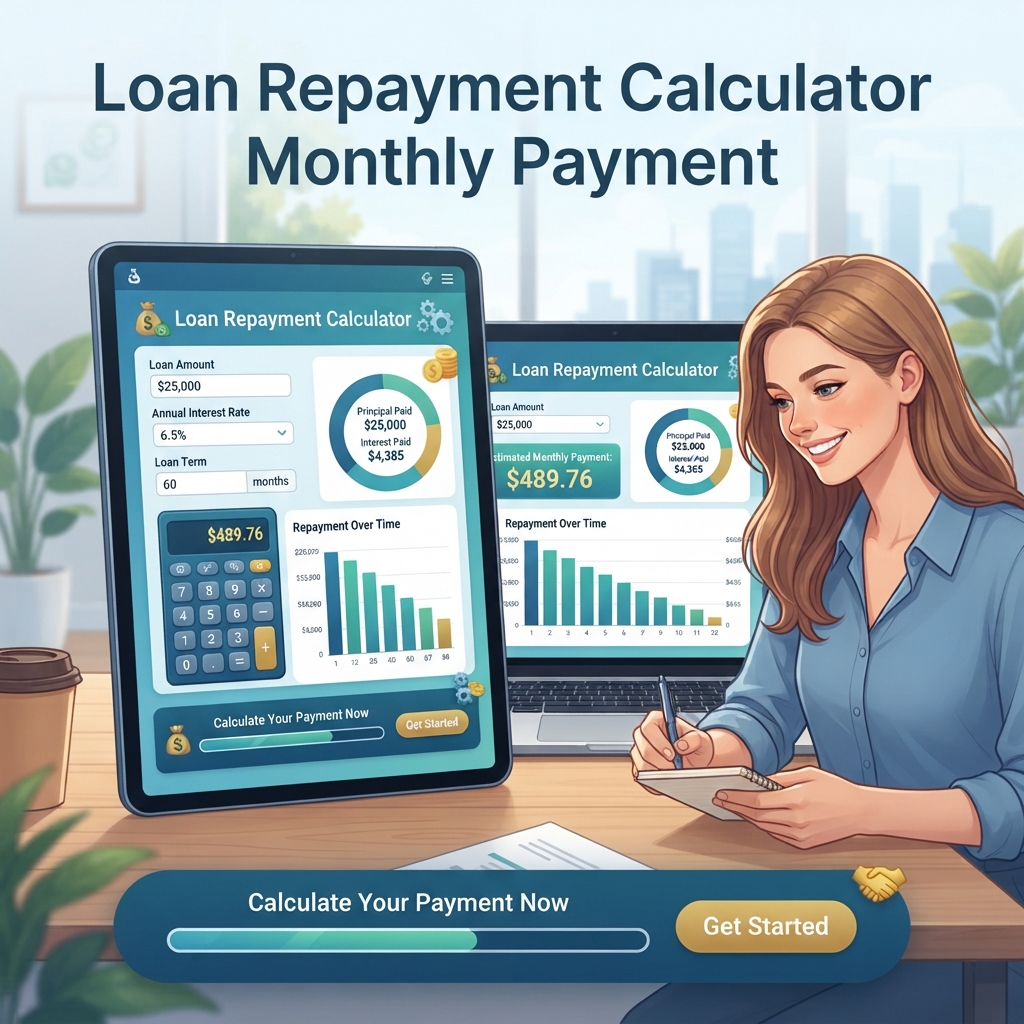
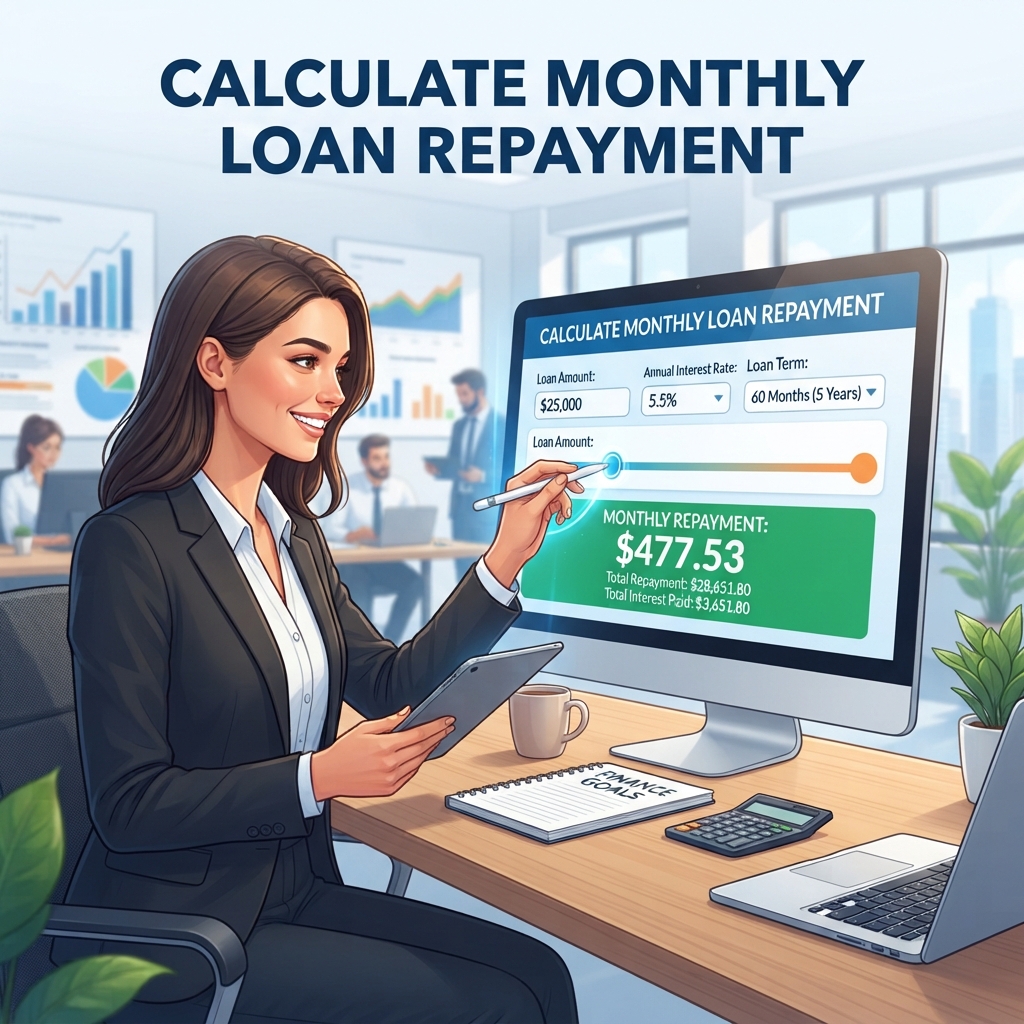
Also Check: How to Calculate Monthly Loan Payments
A mortgage payment calculator Canada can be a useful starting point when planning to buy a home or evaluate your borrowing options.
By comparing different mortgage amounts, interest rates, down payments, and amortization periods, you can better understand how different choices may affect your estimated payments.
Before making a mortgage decision, consider your complete housing budget and verify current rates and mortgage terms with a qualified Canadian lender or mortgage professional.
To get started, use our Mortgage Payment Calculator Canada to estimate your mortgage payment and compare different scenarios.